Leave, Payslips and Policy Questions by Text: A No-Code iMessage AI Agent for HR Teams
See how a no-code iMessage AI agent can answer leave, payslip, policy and onboarding questions using live HR data, approved knowledge and clear access controls.

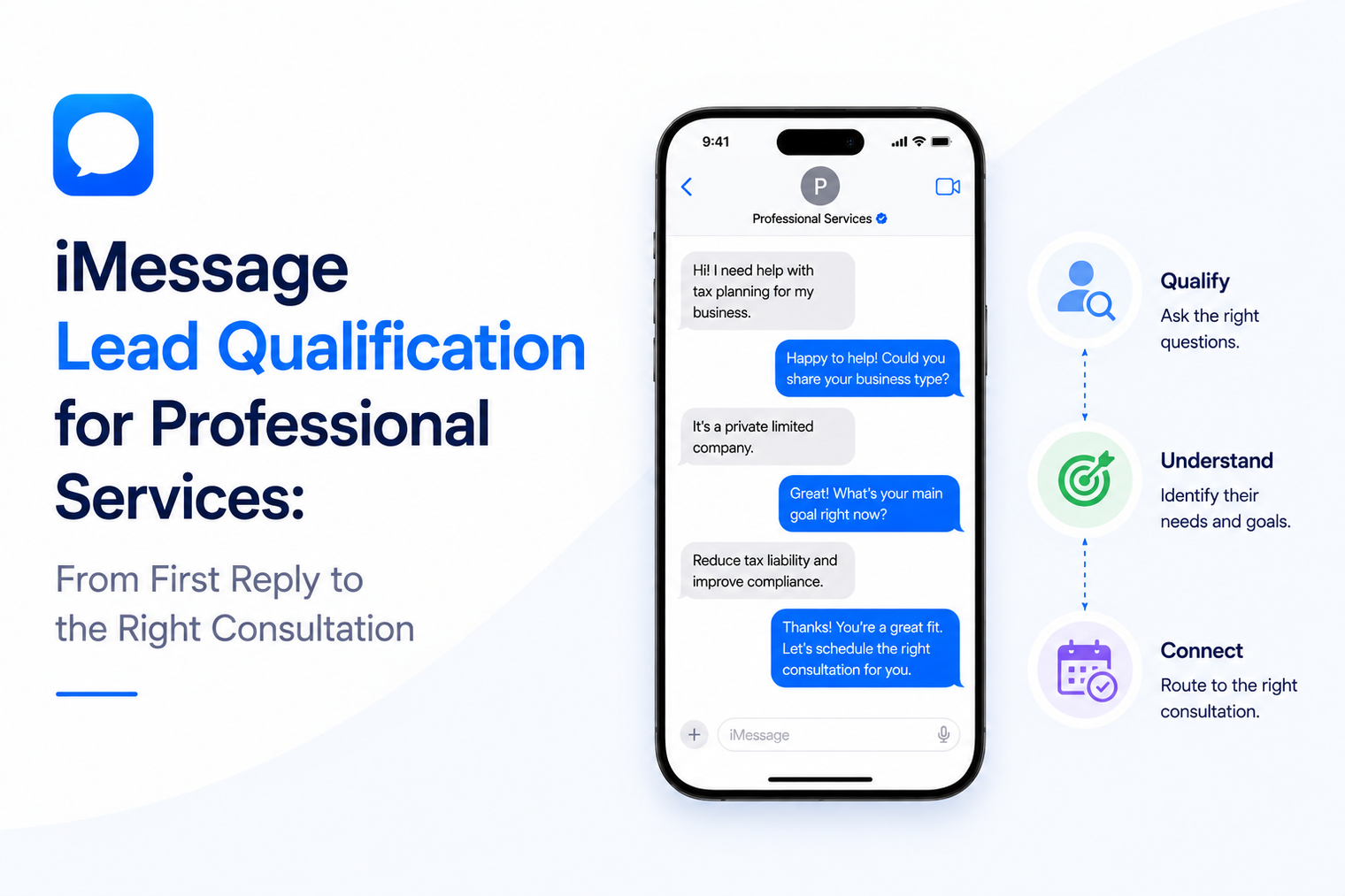
· Lead qualification works best when the firm defines routing rules before writing prompts or automation.
· The conversation should collect a minimum useful profile, not every field the CRM happens to contain.
· AI can interpret natural language and ask follow-up questions, while eligibility, service boundaries and assignment rules remain deterministic.
· CRM updates, consultation scheduling and human ownership should happen as part of the same workflow, not as manual cleanup later.
· A familiar business or representative number can preserve continuity, but consent, relevance and handoff rules still need to be explicit.
Professional services firms often respond quickly to new inquiries and still lose good opportunities. The problem is rarely the first message. It is what happens after it. A prospect says, “I need help with a contract,” “Can you handle our audit?” or “We are looking for a growth partner,” and the firm needs to understand fit, urgency, scope and ownership before the conversation can move forward.
A useful iMessage lead qualification workflow turns that first reply into a structured next step without making the prospect feel as if they are completing a form one field at a time. The conversation gathers only the information needed to route the inquiry, writes useful context to the CRM, and moves qualified prospects toward a consultation or a human specialist.
The objective is not to make an AI model decide whether a person is “good” or “bad.” It is to design a transparent intake system that recognizes the request, asks focused questions, applies business rules and gives a person control whenever judgment is required.
Many qualification systems begin with a long list of questions: budget, company size, timeline, location, service type, role and decision authority. The list may be useful internally, but asking everything immediately can make a warm inquiry feel administrative. Professional services are especially sensitive to this because prospects often arrive with uncertainty. They know the problem, but not necessarily the correct service category.
A better model starts with routing. What information changes who should respond, what can be offered and what should happen next? An accounting firm may need entity type, jurisdiction and deadline. A consultancy may care about business objective, team size and expected start window. An agency may need channel, market, scope and whether the prospect wants a project or an ongoing engagement.
This is where an iMessage AI agent can be useful. The agent can understand different ways of describing the same need, ask one clarifying question at a time and preserve context across the thread. The firm still defines the rules that determine routing and escalation.
The minimum useful profile is the smallest set of facts that allows the business to take the correct next action. It is deliberately narrower than a complete CRM record. Collecting less at the beginning usually improves the conversation because every question has a visible purpose.
| Signal | Why it matters | Good conversational question | What it should change |
|---|---|---|---|
| Service intent | Identifies the right team or workflow. | What are you looking to get help with? | Route to the relevant practice or specialist. |
| Timing | Separates urgent needs from future planning. | Is there a date or deadline we should know about?Is there a date or deadline we should know about? | Prioritize urgent intake or schedule nurture. |
| Location or jurisdiction | Some services depend on where the work occurs. | Which state, country or market is this related to? | Apply service-area or jurisdiction rules. |
| Scope | Helps estimate complexity without forcing a quote. | Is this for one project, an ongoing need, or something still being defined? | Choose discovery depth and owner. |
| Preferred next step | Lets the prospect control the handoff. | Would you rather book a call or have someone reply here first? | Trigger scheduling or representative follow-up. |
Not every firm needs every signal. The design test is simple: if removing a question would not change the route or next action, do not ask it during the first qualification pass. The CRM can be enriched later once a real opportunity exists.
The strongest workflow behaves like a short intake conversation followed by a visible operational action. A six-stage pattern works well for many professional services teams.
Start by identifying what the person appears to need and reflecting it back in plain language. If the request is ambiguous, ask one question that narrows the path. Do not immediately request a company name, budget and phone number when the sender has already contacted you from a known number.
The system should determine whether the request falls inside a supported service area. This may be a direct rule, a lookup against a service catalog or a combination of AI interpretation and deterministic checks. If the firm does not handle the request, say so clearly rather than collecting more information that will not be used.
Ask sequentially rather than sending a block of five questions. A prospect who says, “We need help preparing for an acquisition in September” has already provided scope and timing. The workflow should extract those facts and ask only for what remains necessary.
Once the conversation contains enough useful context, write the structured facts to the contact, lead or opportunity. A proper iMessage CRM integration should preserve the original message context, captured fields, qualification outcome, source and current owner. The transcript should support the representative, not force them to reconstruct the inquiry from scattered notes.
A qualified inquiry may need a consultation, a document request, a specialist callback or a later follow-up. The workflow should make that next step explicit. If scheduling is available, offer valid times from the source-of-truth calendar. If a senior professional must review the request first, say that and set the expectation instead of pretending the booking is confirmed.
When a person takes over, the system should pause automated qualification and transfer the context already collected. The prospect should not have to repeat the service need, deadline and company details because the automation failed to make its work visible.
Natural language is valuable because prospects rarely describe their needs using your internal taxonomy. A founder may say “I need someone to fix our reporting before the board meeting” rather than “fractional finance and management reporting.” An AI layer can map that language to the correct intent, but the operational decision should still be explainable.
Separate interpretation from action. The model may infer that the inquiry relates to a specific service. A rule or reviewed service map decides whether the firm actually offers it. The model may summarize urgency. A workflow rule decides whether that urgency changes the assignment. This separation reduces the chance that a persuasive but incorrect model output creates a commitment the business cannot honor.
Professional services relationships are often personal. A founder, partner, advisor or account executive may already have a number that clients recognize. For those teams, bring your own iMessage number workflows can add automation behind an existing line while allowing normal manual texting to continue.
That hybrid model needs ownership rules. If a partner is actively texting a prospect, the qualifier should not jump back into the thread. If automation sends a follow-up and the prospect replies, the system should stop the sequence, route the response and make the owner visible. Trust comes from continuity, not from hiding automation.
The most common operational failure is a disconnect between qualification and follow-up. One system collects the inquiry, another schedules a reminder, and a representative starts a new conversation without seeing what happened first. The result is duplicated questions and badly timed messages.
A coherent iMessage sales automation workflow uses the qualification result as state. If the prospect is qualified and books, promotional follow-up stops. If the prospect is qualified but not ready, the next action can be a carefully timed reminder. If the inquiry is out of scope, the record should not enter a generic sequence. If a human takes over, automated replies should pause.
An automated text follow-up should therefore be triggered by a known business condition, not by elapsed time alone. “No consultation booked after the prospect asked for availability” is a meaningful trigger. “Three days passed” is not enough context by itself.
| Business type | Useful first-pass qualification | Good automation outcome | Escalate early when |
|---|---|---|---|
| Consulting firm | Problem area, company stage, desired outcome, timing. | Route to the correct consultant and offer discovery times. | The work is outside scope or involves confidential strategic detail. |
| Accounting or finance services | Entity type, jurisdiction, deadline, service requested. | Assign the correct team and request the approved intake documents. | The inquiry involves urgent regulatory or legal interpretation. |
| Creative or digital agency | Goal, channels, market, launch window, engagement type. | Create an opportunity and book a strategy call. | The request needs a custom technical assessment before scoping. |
| Legal intake | Matter category, jurisdiction, timing, conflict-check basics. | Matter category, jurisdiction, timing, conflict-check basics. | Matter category, jurisdiction, timing, conflict-check basics. |
| Advisory or coaching | Goal, current situation, preferred format, timing. | Match to the right advisor or program and schedule an introductory call. | The need falls outside the professional boundary of the service. |
Lead scoring can help prioritize a queue, but it should not replace clear service rules. An opaque score may overvalue company size and undervalue a highly suitable smaller client. It may also encode assumptions that the firm never intended to use. For professional services, explicit routing categories are often easier to review than a single mysterious number.
If scoring is used, keep the inputs business-relevant and auditable. Separate “fit” from “priority.” A request can be a strong fit but not urgent. Another can be urgent but outside scope. Those conditions should produce different next actions, not simply different scores.
· Time from first inquiry to a useful human or automated response.
· Percentage of inquiries that reach a correct service owner without manual re-routing.
· Consultation booking rate after a prospect completes the minimum useful profile.
· Drop-off by qualification question, which reveals where the conversation asks too much too early.
· Duplicate-question rate after handoff, which indicates whether context transfer is working.
· CRM completeness for the fields that genuinely affect routing and follow-up.
· Human escalation reasons, which can reveal missing service rules or knowledge gaps.
Do not optimize for the number of questions answered. A shorter conversation that reaches the right specialist is more valuable than a complete form that causes the prospect to leave.
MessageBlue provides the iMessage transport and automation layer. Your CRM remains the record of the relationship, your scheduling system remains the source of calendar truth, and your professional team remains responsible for advice, scope and judgment. For custom workflows, a two-way iMessage API can receive inbound messages through webhooks, pass them to your application logic and send the approved reply back into the same conversation.
That separation keeps the architecture understandable. Start with one intake path, define the minimum useful profile, connect the record and handoff, then expand only after the team can see exactly why each automated action happened.
Professional services intake should feel like the beginning of a relationship, not a gatekeeping form. Use automation to understand the request, collect only the facts that matter and connect the prospect to the right person or calendar. The quality of the routing matters more than the amount of data collected.
Begin with one service line and one measurable outcome, such as correct assignment or a booked consultation. Once the team trusts that path, expand the qualification logic without losing the conversational simplicity that made the channel useful in the first place.
Yes, for structured intake tasks such as recognizing service intent, asking approved questions, collecting routing facts and preparing a handoff. The agent should not make professional judgments or give regulated advice outside its defined role.
Ask only what changes the route or next step. Most firms should begin with a small minimum useful profile and collect deeper information after a qualified conversation has started.
Only when budget materially changes eligibility or service routing. If it is merely useful for later scoping, asking too early can add friction without improving the first decision.
Yes, when the qualification state permits booking and the scheduling source provides current availability. High-risk or complex inquiries may require a human review before a consultation is confirmed.
The workflow should clarify when the answer is ambiguous and hand off when the request falls outside the approved path. It should never force a complex inquiry into the nearest category just to keep automation moving.
Where supported, yes. The important design requirement is clear conversation ownership so a person and the automation do not respond at the same time.
Connect any LLM to a real blue-bubble number and go live in minutes.
Deploy an Agent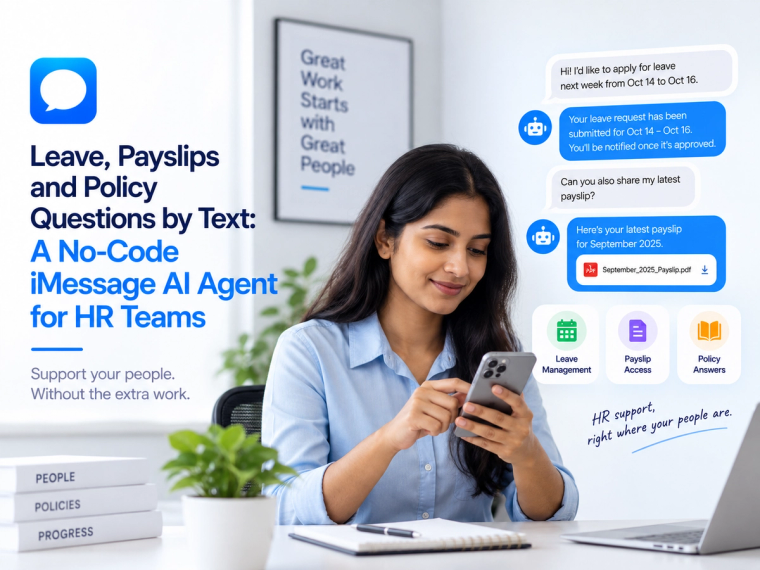
See how a no-code iMessage AI agent can answer leave, payslip, policy and onboarding questions using live HR data, approved knowledge and clear access controls.
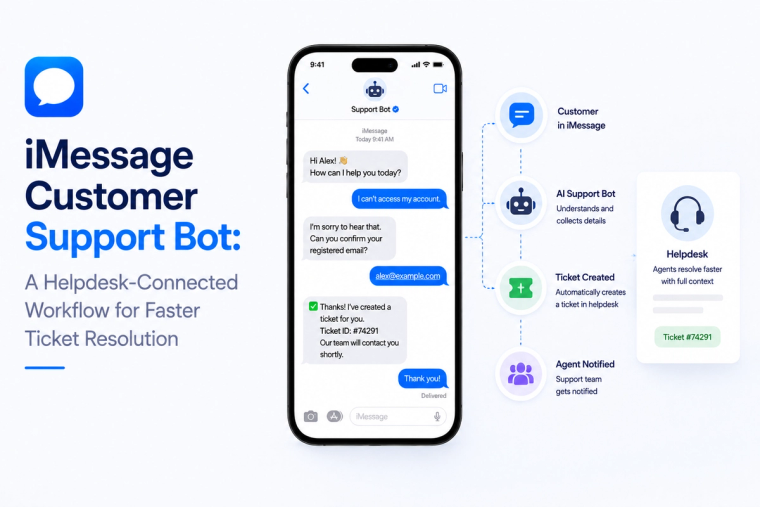
Design an iMessage customer support bot that reads helpdesk data, creates tickets, handles status questions and escalates complex cases with full conversation context.
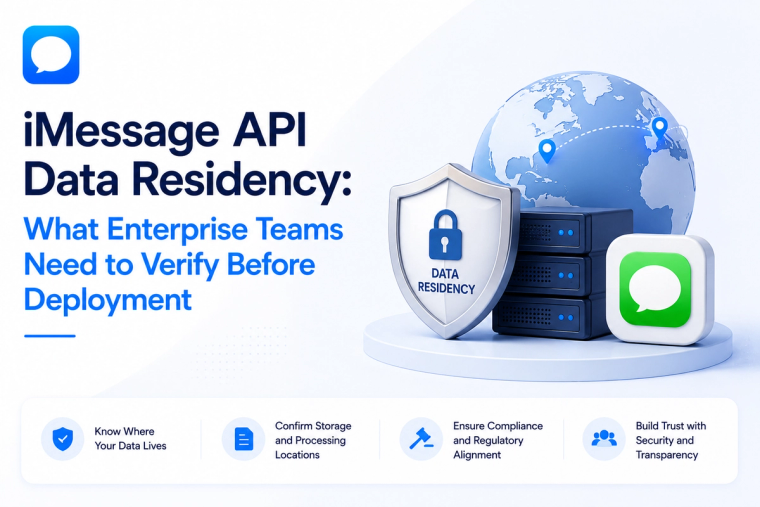
Evaluate iMessage API data residency across message content, logs, backups, keys, model providers, integrations and deployment boundaries before enterprise rollout.