Leave, Payslips and Policy Questions by Text: A No-Code iMessage AI Agent for HR Teams
See how a no-code iMessage AI agent can answer leave, payslip, policy and onboarding questions using live HR data, approved knowledge and clear access controls.

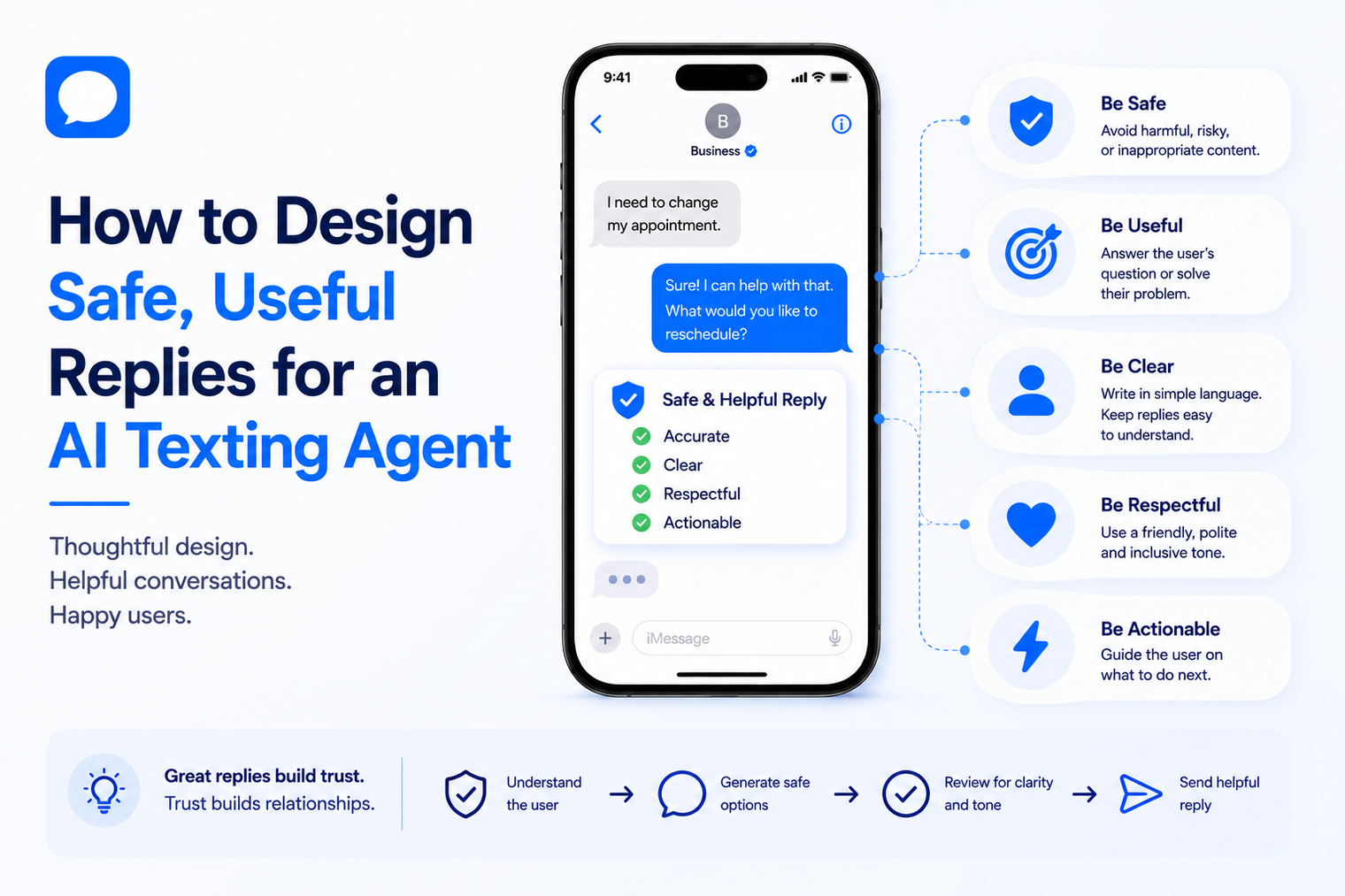
• A useful reply should resolve the immediate need or ask for the one missing detail required to continue.
• Every response should be limited by approved knowledge, live system evidence and the agent's explicit authority.
• High-impact actions need confirmation, while uncertain or sensitive requests need a safe route to human ownership.
• Short replies work best when they include a clear answer, a reason when needed and one obvious next step.
• Testing must cover complete conversations, tool failures, ambiguous language and emotional messages, not only ideal prompts.
A customer does not judge an AI agent by its architecture diagram. They judge the next message on the screen. The reply must answer the real question, remain within the agent's authority and move the conversation toward a useful outcome. A confident sentence that invents a policy, claims an action succeeded or ignores a sensitive request is not a good reply, even when it sounds natural.
This guide explains how to design replies for an AI texting agent that are concise, grounded and operationally safe. The focus is not on making every response sound clever. It is on creating a repeatable decision process for what the agent may say, what it must verify and when it should stop and involve a person.
Natural language is only the visible surface of a customer-facing agent. Underneath the wording, the system is making decisions about intent, evidence, permissions, workflow state and risk. The reply is successful only when those decisions are correct and the customer understands what happens next.
Teams building an iMessage AI agent platform should treat response design as part of the product specification. The delivery channel may make the interaction feel personal, but that familiarity increases the need for accuracy. Customers can read a short text as an immediate promise, especially when it concerns a booking, payment, account change or deadline.
A polished reply can still fail in several ways. It can answer a different question, rely on outdated content, expose information the customer should not see, skip a required confirmation or leave the person trapped in a loop. The design goal is therefore not maximum fluency. It is dependable conversational behavior.
A reply contract is a written agreement between the business and the agent about what a response must contain. It converts broad instructions such as “be helpful” into observable rules. The contract can be applied across models, prompts and channels, which makes testing and future changes easier.
· Purpose: what outcome the reply should support.
· Evidence: which source is allowed to support the answer.
· Authority: which facts the agent may state and which actions it may perform.
· Format: the expected length, tone and structure of the message.
· Confirmation: which actions require an explicit customer approval.
· Escalation: the conditions that transfer ownership to a person or specialist workflow.
A team can prototype this contract in a no-code AI agent builder by defining the role, adding approved business material and testing narrow scenarios. The same contract can later guide a custom implementation when the workflow needs proprietary tools, routing or evaluation logic.
Before an agent sends a message, the response should pass six practical checks. These checks can be implemented through prompts, policies, tool rules, validators or a combination of all four.
The first sentence should address the customer's current request. If the answer is available, provide it directly. If required information is missing, ask for only the next detail needed. Avoid restarting the conversation with a generic greeting or repeating information already provided in the thread.
The reply should be traceable to approved knowledge or a verified system result. When the source is incomplete, the agent should narrow the answer or say what it can confirm. It should never fill a gap with a plausible policy, delivery date, price or account status.
A customer may ask the agent to waive a fee, change a contract, approve a refund or make a medical or financial judgment. The response policy must distinguish between information, recommendation, transaction and approval. The agent can explain the standard process without pretending to hold authority that belongs to an employee.
A useful message ends with a clear next step. That may be a focused question, a confirmation request, a link, a choice between two available options or notice that a representative will reply. Do not present five unrelated paths when one decision is enough to continue.
Tone should respond to the situation rather than follow one personality setting. A product question can be warm and concise. A failed payment, service interruption or frustrated customer needs acknowledgment and precision. Sensitive matters should avoid humor, unnecessary familiarity and overconfident reassurance.
When the agent cannot proceed, it should explain the boundary in plain language and preserve momentum. A weak refusal says only that the request cannot be handled. A stronger response states what is known, what requires human review and what the customer can expect next.
A response is safer when the system knows where each type of information belongs. Mixing static content, live records and human judgment encourages the model to guess. Separate the sources and define which one wins when they disagree.
| Source | Best Used For | Reply Rule | Main Risk |
|---|---|---|---|
| Approved business knowledge | Policies, services, instructions and stable FAQs | Answer only from the current approved version | Outdated or conflicting documents |
| Live business system | Availability, order status, account data and current pricing | State the result returned by the tool | Claiming success when the tool fails |
| Conversation state | Details already supplied, prior choices and current ownership | Reuse confirmed context without asking again | Using stale or unrelated history |
| Human authority | Exceptions, judgment, approvals and sensitive decisions | Summarize and route rather than decide | The agent acting beyond its role |
Organizations handling regulated or sensitive conversations may also require a private iMessage API so message transport, logs, keys and access controls can fit the approved security boundary. Deployment control does not replace response policy, but it helps ensure that the policy operates inside the right environment.
Reusable response patterns reduce improvisation. They should still sound natural, but the logic behind them should remain consistent.
State what the agent can do and ask one focused question. For example: “I can check available times. Which location should I use?” This is more effective than a long form disguised as a text message.
Do not choose the most convenient answer. Explain that the information needs verification and route the conflict to the owner responsible for the policy or record. The customer should not have to discover the inconsistency after acting on the reply.
Separate tool failure from business outcome. If a calendar lookup fails, the agent should not say that no appointments are available. It should say that availability could not be checked and offer a retry or human follow-up.
Before cancellations, purchases, account edits or other high-impact actions, repeat the essential details and request confirmation. After execution, report the actual tool result. Never confirm an action solely because the model intended to call the tool.
Acknowledge the full message, then process the requests in a safe order. Handle urgent or blocking items first. If the actions are independent, the agent can confirm the first result and continue with the second without forcing the customer to restate it.
Recognize the problem before explaining the process. Avoid arguing, repeating the same instruction or claiming empathy without taking action. A practical structure is: acknowledge, state what can be done now, give a time or owner and keep the handoff visible.
Texting rewards compression, but brevity must not remove essential context. A strong reply often follows a three-part shape: direct answer, required detail and next step. The second and third parts are optional when the answer is complete.
· Lead with the answer rather than a long preface.
· Use one idea per message when the customer must make a choice.
· Prefer concrete nouns, dates and actions over general reassurance.
· Avoid restating the complete policy when one sentence answers the question.
· Use choices only when each option is truly available.
· Do not hide limitations inside a long paragraph.
Concise does not mean robotic. A short acknowledgment can preserve tone, and a well-placed question can make the interaction feel attentive. The important test is whether the customer knows what the agent understood and what to do next.
Tool access changes the risk of a reply. The agent is no longer only producing words. It may be reading private records or changing business data. Each tool should expose the minimum action required, return a clear success or failure state and support logging that lets the team reconstruct what happened.
· Validate tool arguments before execution.
· Confirm customer identity when the action depends on protected account data.
· Require explicit approval for irreversible or high-value changes.
· Return the tool result to the agent instead of allowing it to infer success.
· Use idempotency for actions that may be retried.
· Restrict data returned to the fields needed for the current conversation.
A policy matrix helps product, operations and legal reviewers agree on behavior before launch. It also gives evaluators a clear expected outcome for each test scenario.
| Request Type | Agent May Do | Agent Must Not Do | Safe Next Step |
|---|---|---|---|
| Routine information | Answer from approved content | Invent an exception or unpublished detail | Ask if the customer needs a related action |
| Live status request | Call the approved system and report the result | Use cached memory as current status | Retry or route if the tool is unavailable |
| Account change | Collect required details and confirm intent | Apply a change without permission checks | Execute through a narrow tool or hand off |
| Policy exception | Explain the standard policy | Promise approval or waive a requirement | Send a concise summary to the authorized owner |
| Sensitive advice | Provide approved administrative information | Present judgment as professional advice | Route to a qualified person or approved resource |
| Abusive or unsafe content | Set a boundary and protect staff | Continue an escalating argument | Pause, block or escalate according to policy |
A reply that looks correct in one turn may fail after the customer changes a detail, corrects the agent or returns later. Testing should include the full sequence from first message to resolution, including the tool calls and ownership changes that happen between replies.
Red-team testing should also attempt to override the agent's instructions, extract restricted data or persuade it to claim that an action succeeded. The goal is not to prove that the model can never fail. The goal is to discover which controls catch the failure before it reaches a customer.
Production monitoring should connect language quality to business outcomes. A response may be grammatically strong but operationally weak. Review samples from successful and unsuccessful conversations, then classify the reason rather than treating every handoff or abandoned thread as the same problem.
Response design belongs in the agent and business workflow, while message transport needs its own production controls. MessageBlue provides a two-way iMessage API for sending replies and receiving inbound events through webhooks. This separation lets the product team focus on intent, evidence, tools and policy without building the entire messaging layer.
The same reply contract can support a developer-built agent or a no-code implementation. The critical requirement is that the final behavior remains observable. Teams should know which source supported the answer, which tool was used, whether a human took ownership and how the conversation ended.
The best AI reply is not the longest, friendliest or most human-sounding message. It is the response that understands the request, uses the right evidence, stays within authority and gives the customer a clear path forward.
Start with a reply contract, separate your sources of truth and test complete conversations under failure conditions. When every message follows the same operational discipline, an AI texting agent becomes more useful to customers and easier for the business to govern.
The reply should be as short as possible without removing the answer, an essential qualification or the next step. Many routine messages can fit in one to three sentences, but complex or sensitive situations may require more context.
Use approved knowledge for stable facts, live tools for current data and explicit rules that prohibit guessing. When evidence is missing or conflicting, the agent should narrow the answer or transfer the request for verification.
Disclosure requirements depend on the context, policy and jurisdiction. Regardless of wording, the business should not mislead customers about the agent's authority, and it should make human assistance accessible when needed.
Confirm actions that are irreversible, financial, privacy-sensitive or likely to surprise the customer. Examples include cancellations, purchases, refunds, account changes and sharing protected information.
Use a scenario set that includes routine questions, confusion, urgency, frustration and sensitive requests. Score whether the reply acknowledges the situation, remains professional and moves toward a useful outcome without becoming overly casual or defensive.
Yes. The response contract, source rules, tool permissions and evaluation criteria should sit around the model. A model change may affect performance, but the business expectations should remain stable and testable.
Connect any LLM to a real blue-bubble number and go live in minutes.
Deploy an Agent
See how a no-code iMessage AI agent can answer leave, payslip, policy and onboarding questions using live HR data, approved knowledge and clear access controls.
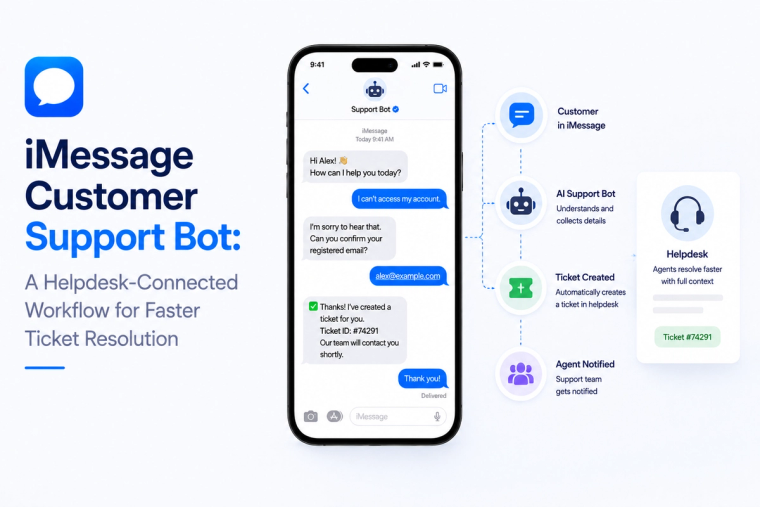
Design an iMessage customer support bot that reads helpdesk data, creates tickets, handles status questions and escalates complex cases with full conversation context.
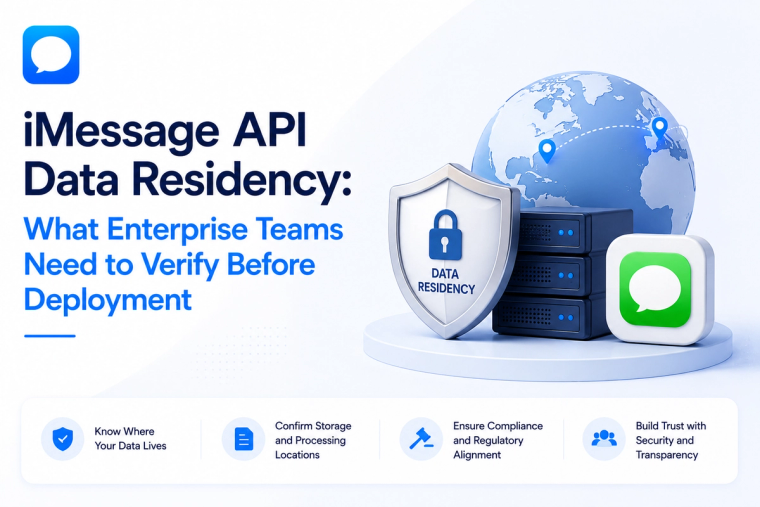
Evaluate iMessage API data residency across message content, logs, backups, keys, model providers, integrations and deployment boundaries before enterprise rollout.